History of Reiki
This overview of the creation Reiki techniques and its subsequent development is not only for Reiki practitioners, but for all those who want to know how Reiki originated and came from Japan to the West. This is the history of Reiki according to the knowledge and discoveries of the last two or three decades in Japan, at its source. Before that, there was mythological story about the history of Reiki in which real facts and invented anecdotes are mixed. In an alternative New Age environment, that story has become even more fantastical in some Reiki schools, stretching the existence of Reiki to ancient Egypt or even to the mythological Atlantis.
Content
- The Path of Reiki Spread: From Mount Kurama to the West
- Mikao Usui (1865 – 1926) and Usui Reiki Ryoho
- Chujiro Hayashi (1879 – 1940) and the development of a practical approach
- Hawayo Takata (1900 – 1980) and the arrival of Reiki in the West
- The spread of Reiki in the world and the role of the 22 masters
- Some historical untruths
- Continuing research into the history of Reiki
The Path of Reiki Spread: From Mount Kurama to the West
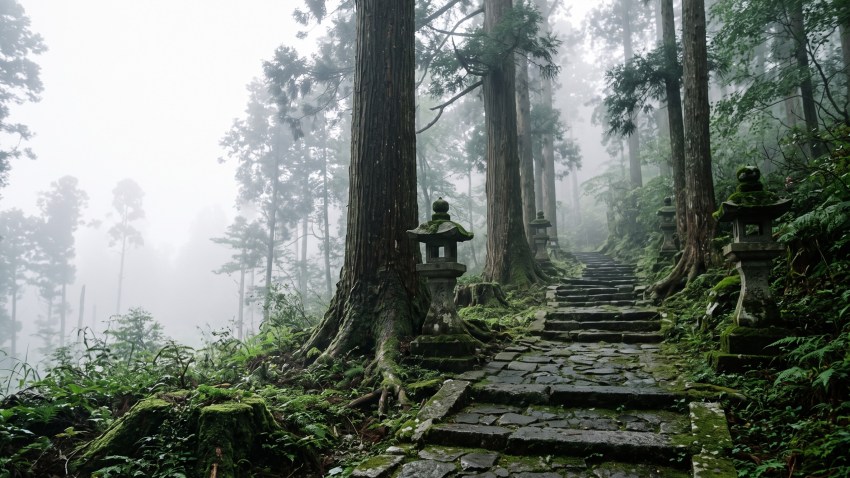
Reiki was created early 20th century in JapanIt was created by the Japanese Mikao Usui after his spontaneous initiation. He experienced it after a 21-day fast and meditation on Mount Kurami near Kyoto in 1922. This was preceded by years of study, meditation, practice of martial arts and other disciplines.
Reiki has arrived in the West via Japanese-American Hawayo TakataShe was initiated into first level of reiki In 1935, during his visit to Japan, it was initiated by Usui's student Chujiro Hayashi (pronounced "chujiro hayashi"). Masterpiece became in 1938. She was very successful in healing with Reiki and initiated a large number of people into First i second level of reikiBy the time of her death in 1980, she had initiated 22 masters. In the 1980s, Reiki began to spread intensively around the world..
In the late 1990s, some masters went to Japan to research the roots of Reiki. and are surprised that Reiki is very much alive there. Until then, it was thought that Reiki had died out in Japan due to World War II. In the West, developed a number of directions or schools of Reiki, depending on how each master found it appropriate to change the original technique or add new elements to it.
With the discoveries in Japan in recent decades, there are now directions that seek to "Japanizing" the Western form of ReikiHowever, the essence of it all is working with energy, developing one's own sensibility and intuition, and consequently developing or expanding one's own consciousness. We are friends (or spiritual development) cannot be separated from practical work with energy.
Mikao Usui (1865 – 1926) and Usui Reiki Ryoho
Mikao Usui
Mikao Usui (1865 – 1926) was member of the Tendai Buddhist sect. As a child, he studied Kiko, the art of controlling one's own qi (the Japanese version of Qigong / chi gong). He loved to read a lot, was knowledgeable about medicine, psychology, divination skills, and was interested in various religions. He studied Buddhist symbols and healing methods to avoid wasting one's own qi during the laying on of hands (which was a common healing method in Japan at the time). He did not understand the symbols he encountered in the manuscripts nor did he find the answers he was looking for. Therefore, in the spring of 1922, he began a 21-day fast and meditation on Mount Kurami near KyotoOn the last day of fasting, he received the gift of attunement in Reiki, i.e. spontaneous initiation.
At first he did not understand the significance of this, but later he realized and then developed a method which he called Usui Reiki Ryoho (Usui's Reiki Method)The purpose of the method was not only healing, but above all spiritual development and achieving enlightenment. The 1923 Tokyo earthquake prompted Usui and his students to apply Reiki on the victims on a large scale. This made Usui and Reiki famous and popular.
The Usui Reiki Ryoho Gakkai Society and Historical Discoveries in Japan
After his death, Usui's students founded the Usui Reiki Ryoho Gakkai society, and Usui was declared the first president. The society became quite popular after World War II. closed to the public, and especially for foreigners. This was not known until the 1990s when some Western Reiki masters decided to investigate the roots of Reiki in Japan.
They found it in Tokyo. Usui's tombstone, erected in 1927 by members of the Gakkai (society), with the most relevant information to date about Usui and the origins of the Reiki technique. Usui's original manual has also been found. Reiki was initially taught over a long period of time in seven steps (four sub-steps in 1nd degree, two substages in 2nd degree, 3rd degree). It was learned that Usui probably introduced it later symbols in the second degree of Reiki as an aid in working with energy.
It was discovered that Usui's successor was not Chujiro Hayashi, which was claimed by Hawayo Takata who brought Reiki to the West, nor was he the only master initiated by Usui. Usui initiated about 20 masters, Ie. Shihan (Japanese: teacher, example). Usui's society continued its work after Usui's death, and Juzaburo Ushida was the second president of the societyAfter a while, Hayashi left the company and founded his own clinic.
The Gakkai (society) has had eight presidents to date (2023) and is still relatively closed and distrustful of the Western form of Reiki. The original Japanese form of Reiki is somewhat different from the Western form because it uses additional techniquesFor example, recitations of poems by Emperor Meiji, various meditations, breathing techniques, sending energy through the eyes or breath, massage techniques and other methods that are close to Japanese culture, Buddhism and Shintoism.

Chujiro Hayashi (1879 – 1940) and the development of a practical approach
Chujiro Hayashi (1879 – 1940), naval officer and doctor, was a student of Usui who became Shihan (master) in 1925. After Usui's death, he founded own clinic changed you method of treatment. Instead of a sitting position he introduced the lying position appropriate for patients in the clinic, and each patient was given Reiki by at least two Reiki practitioners.
As a doctor, he wrote his a manual with a detailed list of recommended hand positions for specific ailments. Today, that manual has been rediscovered. It seems that also adapted the system of initiations and teachings with the intention that Reiki students would be immediately ready to work with energy, unlike the long-term teaching during Usui's time. After Hayashi's death, the clinic was continued by his wife Chie.
Today there are reiki masters in Japan who are descended from Hayashi and who are not members of the original reiki society. That's it the second line of reiki masters present in JapanValuable information about Hayashi's methods of teaching Reiki comes from his student Chiyoko Yamaguchi (1921 – 2003).
Hawayo Takata (1900 – 1980) and the arrival of Reiki in the West
Hawayo Takata
Hawayo Takata (1900 – 1980) was American born to Japanese parents in Hawaii. Due to illness (asthma, gallstones, stomach pain, nervous breakdown) In 1935 she traveled to Japan. in search of a cure. There she learned about Hayashi's clinic and began treatments. After a few months, she was completely healed and wanted to learn the Reiki healing method.
She remained in Japan for another year, studying with Hayashi. In 1937, she returned to Hawaii, and he soon visited her. Hayashi who initiated her there in third degree (21.2.1938.). With that, reiki left Japan and began its development and expansion in the West. This may not have been accidental, because with the advent of World War II, reiki in Japan fell into complete secrecy.
Takata was a very enterprising and energetic person who was very successful in healing and initiating into the 1st and 2nd degrees of Reiki. However, it was only a few years before her death that she began to initiate other masters (3rd degree). For this, she asked for the amount of $10.000 and for the masters to commit that reiki will be their only source of income. By 1980, she had initiated a total of 22 masters.
Adaptations, rules and myths in teaching Hawayo Takata
Takata is threw out some techniques which we know today that she learned from Hayashi. Reiki has been simplified and adapted to Western conditions. No, she also introduced some of her own rules and she required her students to adhere strictly to them. She taught only seven-eight basic positions on the bodyReiki was transmitted orally (this was popularly called by oral tradition). Students they were not allowed to take notes (although she herself received a manual from Hayashi). Papers on which drawing was practiced symbols at the end of the 2nd degree course it had to be ritually burned. She did not allow the symbols to be shown to anyone who was not initiated into second degree.
Takata is introduced numerous myths into the story of Usui, such as being a Christian. It is possible that she did this to bring Reiki closer to Westerners, especially at the dawn of World War II when the Japanese were enemies of the United States. Read her version of the Reiki story in The History of Reiki According to Hawayo Takata.
Takata is claimed to be the only Reiki master in the world, although she knew that there was a Reiki society in Japan and that Reiki had survived World War II. It is known that after the war she visited Japan and met with Chie, Hayashi's wife who ran the clinic. Takata introduced a price for master's degree in the amount of $10.000, while first level cost $125-150, and second degree $500-600, which was a very high amount at the time. It is known that Hayashi already charged large amounts for courses and treatments. In order to justify the high prices, the story of Usui was introduced the myth of beggars who didn't want to change because they got reiki for free.
The spread of Reiki in the world and the role of the 22 masters
Reiki immediately after Takata's death
22 masters began to spread Reiki around the world. In 1982 they came together to agree on the further development of Reiki. When everyone had drawn symbols they saw that there were some differences, which surprised and confused them. They chose the most similar ones and tried to introduce standardization. They discovered that Takata taught each master and the initiation procedure somewhat differently. Today it is known that the form of the initiation procedure is not as important as the clear intention of the master and the student to make the initiation.
In the spirit of Takata's version of history, where she was third in line from Usui (Usui – Hayashi – Takata), the masters thought that they had to choose between themselves the so-called Grand Master, the heir of the main lineage. They chose To Takata's granddaughter, Phyllis Lei FurumotoThis led to a rift, and Barbara Weber Ray founded her own society, claiming to be the only one to have completed all seven degrees of Reiki with Takata (although Takata taught three degrees) and that Takata personally appointed her as his successor. To this day, she claims that her version of Reiki is the only correct one (The Radiance Reiki).
Still, Reiki is above ego-talk and it found a way to spread. Over time, more and more new masters were initiated, and they initiated new masters. The prices of the master degree began to fall, and Reiki spread more and more throughout the world.
The emergence of new variants of Reiki and the question of symbols
In an environment permeated with New Age, they began to appear new variants of Reiki and new symbolsThese symbols were claimed to have been channeled by some individuals or taken from Tibetan scriptures (Tibetan or Karuna Reiki). Examples of these symbols are Dumo i KriyaToday there is at least 30 versions of Reiki which differ in the number of symbols, the number of degrees, the methods of initiation, the stories of the origin of Reiki and more. However, Reiki is above all this, because energy after any initiation flows through the palms and works. And that's the only criterion! The rest is just choreography.
Dependence on symbols, i.e. introducing new symbols is also unnecessaryHiroshi Doi, who was a member of the original Japanese Gakkai (society), but left that secret society and opened up to the public, claims in his book “Reiki for the New Age” that the goal is overcome the need for symbols, and not constantly go after new ones. Although some go through different schools of Reiki in their search for the ideal technique, personal growth, enlightenment, or just another degree in a row, I personally believe that this is not necessary because Reiki is fundamentally simple.All that is needed after initiation is a lot of personal practical application.
Some historical untruths
Before reading Takata's stories about Reiki, which is a mixture of fact and fictional allegory, be aware of some of the distortions that occur in that story, but also in the Reiki environment in general.
Misconceptions about Mikao Usui
- Usui was a Christian. → Usui was a Buddhist, as is confirmed on his tombstone. Would a Christian, especially at that time, fast on a Buddhist holy mountain?
- Usui was a doctor. → This is probably a clumsy translation of the polite title Sensei a title used in Japan to address teachers, lawyers, and others. There is no evidence that he was a physician or academic doctor. Perhaps the title was intended to give him prominence in the West.
- Usui was in the US and studied at the University of Chicago. → There are no official records of him at that university. Usui's tombstone mentions that he traveled abroad, but it does not specify where he went.
- Usui was the dean of Doshisha University in Kyoto. → There are no official records of him at that university.
Myths about teaching, successors and the survival of Reiki
- Usui taught in the slums for seven years. → According to his tombstone, Usui received his Reiki attunement in 1922 and died in 1926. So he taught Reiki for only four years.
- Reiki died out in Japan because of the war, and Takata is the only Reiki master in the world. → Today we know that this was not the case and that Takata knew this, because after the war she visited Japan and spoke with Hayashi's wife Chie, who suggested that they continue running the clinic together.
- Hayashi is the successor of Usui. → As already stated, he was only one of Usui's 2.000 students, i.e. one of about 20 masters initiated by Usui. The legitimate successor to Usui in the sense of the second president of the Usui Reiki Ryoho Gakkai was Ushida.
These are some of the statements that you will come across in older literature, and unfortunately, even today, some Reiki masters pass them on unscrupulously despite the discovered facts.
Continuing research into the history of Reiki
The discovery of new details about the history of Reiki, its origins and meaning is not yet complete. Reiki symbols, as well as other topics related to Usui and Reiki in general. There are heated debates and conflicting opinions. This brief summary only shows a part of what is known and it is possible that more will be discovered over time.
Learn more about the history of Reiki through additional materials in Reference lists for Reiki practitioners.
Boris Pecigoš, reiki master and teacher
- Reiki courses with Boris
- Reiki renewal and initiation
- Mentor class for reiki practitioners
- A Guide to Reiki for Reiki Practitioners (Articles + Videos)
- Energy intensive in nature
Browse all articles and videos in our Reiki libraryThere are quite a few of them, and you can browse them specifically by degree: reiki posts useful for all levels, and especially for those new to reiki, because it also contains the basic techniques of the first level, reiki posts for the second level which deal with reiki symbols and advanced energy work techniques, and a few reiki posts for the third level for reiki masters (and those thinking about mastering).
On our website there is more than 200 texts and videos on personal development. Start your research with our selection 20 key articles in which we thoroughly cover the most important topics.
What do we write about and what do we do for you?
Personal development. Energy hygiene. Guided meditations. Reiki and energy techniques. Mystical phenomena and experiences. Geomancy and natural energies. Energy photo prints. Land art.
Start with 20 key articles from our database of 200+ texts and videos.
- Energy analysis and consulting: Mapping the state of your energy field and detecting blockages and blockages. (more)
- Energy cleansing and restoration: Deep purification of aura and space. Removal of entities and astral parasites. Removal of spells, curses and black magic. Cancellation of vows, oaths, perjury, initiations and ceremonies. (more)
- Breaking toxic and addictive attachments: Energy release and cessation of energy loss. (more)
- Energy protection and stabilization: Protection against black magic, spells, astral parasites and other energy attacks. (more)
- Complete energy transformation: Four steps towards achieving energetic integrity, lasting peace and self-realization. (more)
- Energy intensive in nature: Deep work on your goals and energy vortex blockages. (more)
- Reiki courses: Systematic mastery of energy for personal and professional progress. (more)
- Quick sale of real estate: Removal of blockages and energy support for successful sales within 4 months. (more)
Contact
E-MAIL: boris.sasho@gmail.com
Follow our YouTube channel, the only platform besides the website where we publish new videos and posts:
Most read today